
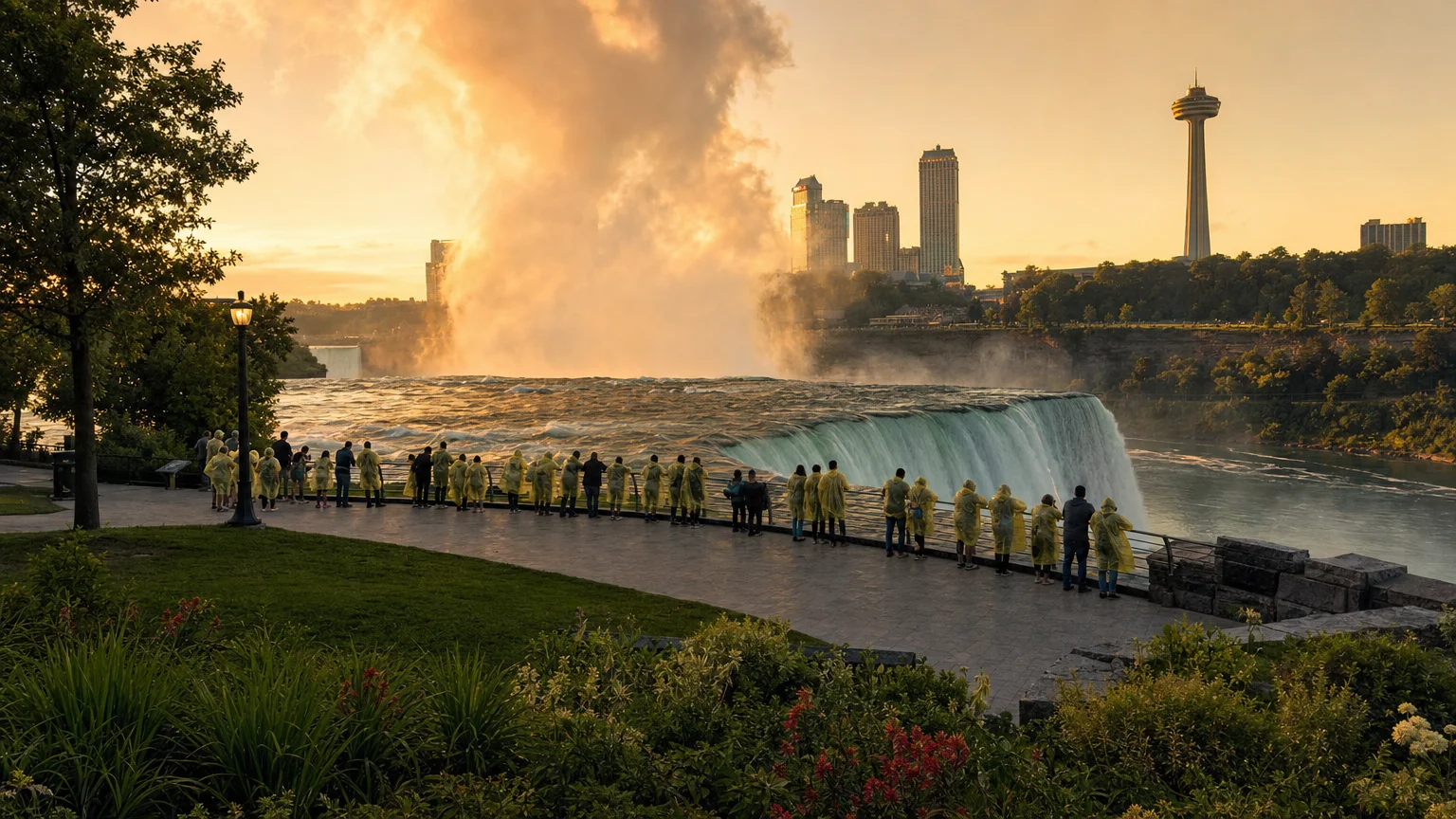
Roughly 90% of Niagara Falls’ total water volume flows over Horseshoe Falls — located entirely on the Canadian side. That single fact shapes almost every informed answer to the Canadian side vs. US side debate, and it is the starting point any serious tour planner should understand before booking.
Quick Answer
For most visitors departing from Toronto or anywhere across the GTA, the Canadian side delivers the superior panoramic experience: broader views, more developed parkland, and the full sweep of Horseshoe Falls from a single vantage point. The US side offers a closer, more intimate perspective on the American Falls and Bridal Veil Falls, but requires a border crossing and additional logistics that most day-tour itineraries cannot easily absorb.
Key Takeaways
- The Canadian side provides the iconic panoramic view of Horseshoe Falls that appears in virtually every photograph of Niagara.
- Approximately 90% of the river’s flow goes over Horseshoe Falls on the Canadian side.
- Most guided tours departing Toronto remain on the Canadian side — no passport or US entry required.
- The US side offers unique attractions like Cave of the Winds and a closer ground-level view of Bridal Veil Falls.
- Crossing to the US side requires a valid passport and is subject to border wait times that can significantly affect a day-tour schedule.
- The Canadian side hosts marquee paid attractions: Niagara City Cruise (boat), Journey Behind the Falls, and Skylon Tower.
- Budget-conscious travellers should note that the Canadian side’s attractions are typically bundled into tour packages from Toronto operators.
- For international visitors arriving in Canada, staying on the Canadian side avoids eTA or US visa complications entirely.
What Makes the Canadian Side the Preferred Choice for Tours?
The Canadian side’s primary advantage is perspective. Standing on the curved promenade of Queen Victoria Park, visitors look directly across and slightly down at the full arc of Horseshoe Falls — a 670-metre-wide curtain of water that no single viewpoint on the US side can replicate. This is the shot that defines Niagara Falls in the global imagination, and it is only achievable from Ontario.
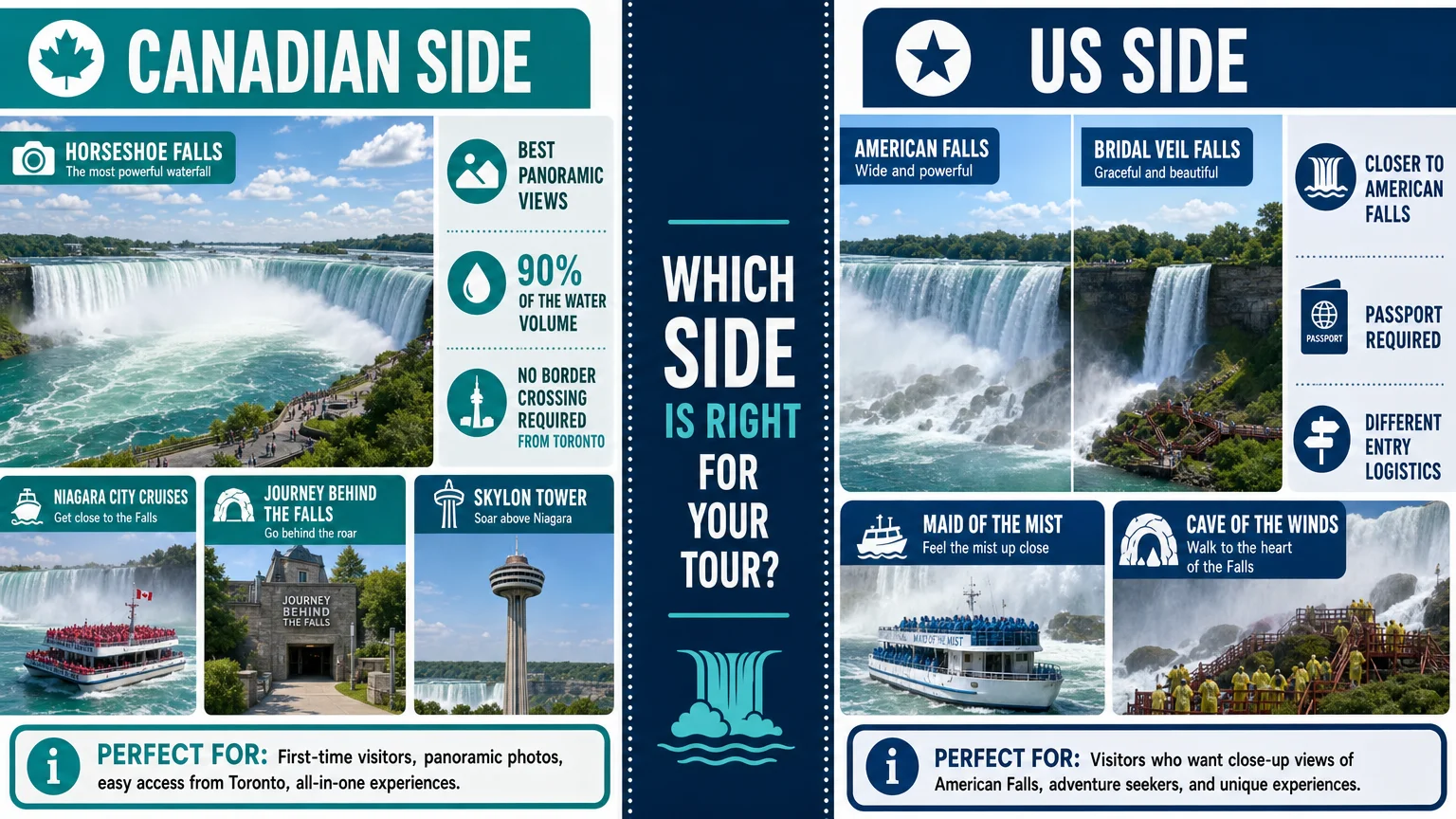
Beyond the view itself, the Canadian side concentrates the most visited paid attractions within walking distance of each other. The Niagara City Cruise (formerly Maid of the Mist on the Canadian side) takes passengers directly into the mist at the base of Horseshoe Falls. Journey Behind the Falls descends through tunnels to observation portals cut into the rock directly behind the waterfall. The Skylon Tower provides an aerial perspective from 160 metres above the falls. These three experiences alone account for the majority of what tour operators include in their packages — and all three sit within a short walk on the Canadian side.
For travellers using our pricing and money-saving breakdowns for York Region, it is worth noting that operators who bundle these marquee attractions typically represent better overall value than cheaper base-price tours that exclude them.
What Does the US Side Offer That the Canadian Side Does Not?
The US side is not without merit — it simply serves a different kind of experience. From Prospect Point on the American shore, visitors stand at the very brink of the American Falls and Bridal Veil Falls, looking almost straight down into the churning water below. The sense of scale is visceral in a way that differs from the panoramic Canadian view.
Cave of the Winds is the US side’s signature attraction: a guided descent to wooden walkways at the base of Bridal Veil Falls, where guests are soaked by the spray at close range. It is a genuinely distinct experience not replicated anywhere on the Canadian side. Goat Island, accessible from the US side, also provides a mid-river perspective that places visitors between the two falls — a geological vantage point unavailable from Canada.
The trade-off is logistical. Crossing from Canada to the US requires a valid passport (and for some nationalities, a US visa or ESTA), adds a border inspection to the itinerary, and introduces unpredictable wait times at the Rainbow Bridge or Lewiston-Queenston Bridge. On a guided day tour departing Toronto, that uncertainty can consume 30–90 minutes of a schedule that is already tightly managed.
Canadian Side vs. US Side: A Direct Comparison
The table below summarises the practical differences that matter most when choosing which side your tour should prioritise.
| Factor | Canadian Side | US Side |
|---|---|---|
| Best panoramic view of Horseshoe Falls | ✅ Yes | ❌ No |
| Closest view of American & Bridal Veil Falls | ❌ No | ✅ Yes |
| Border crossing required (from Toronto) | ❌ No | ✅ Yes (passport + inspection) |
| Niagara City Cruise (boat into mist) | ✅ Yes | Maid of the Mist (separate) |
| Journey Behind the Falls | ✅ Yes | ❌ No |
| Skylon Tower | ✅ Yes | ❌ No |
| Cave of the Winds | ❌ No | ✅ Yes |
| Niagara-on-the-Lake wineries nearby | ✅ Yes | ❌ No |
| Clifton Hill entertainment district | ✅ Yes | ❌ No |
| Suitable for international visitors without US authorisation | ✅ Yes | ❌ No |
Which Side Do Most Toronto-Departing Tours Visit?
The overwhelming majority of guided tours departing Toronto, Mississauga, Markham, Brampton, and other GTA cities operate exclusively on the Canadian side. This is a deliberate choice by operators, not an oversight. The Canadian side’s concentration of world-class attractions, combined with the absence of border-crossing logistics, allows tour guides to deliver a complete, high-value experience within a standard full-day itinerary.
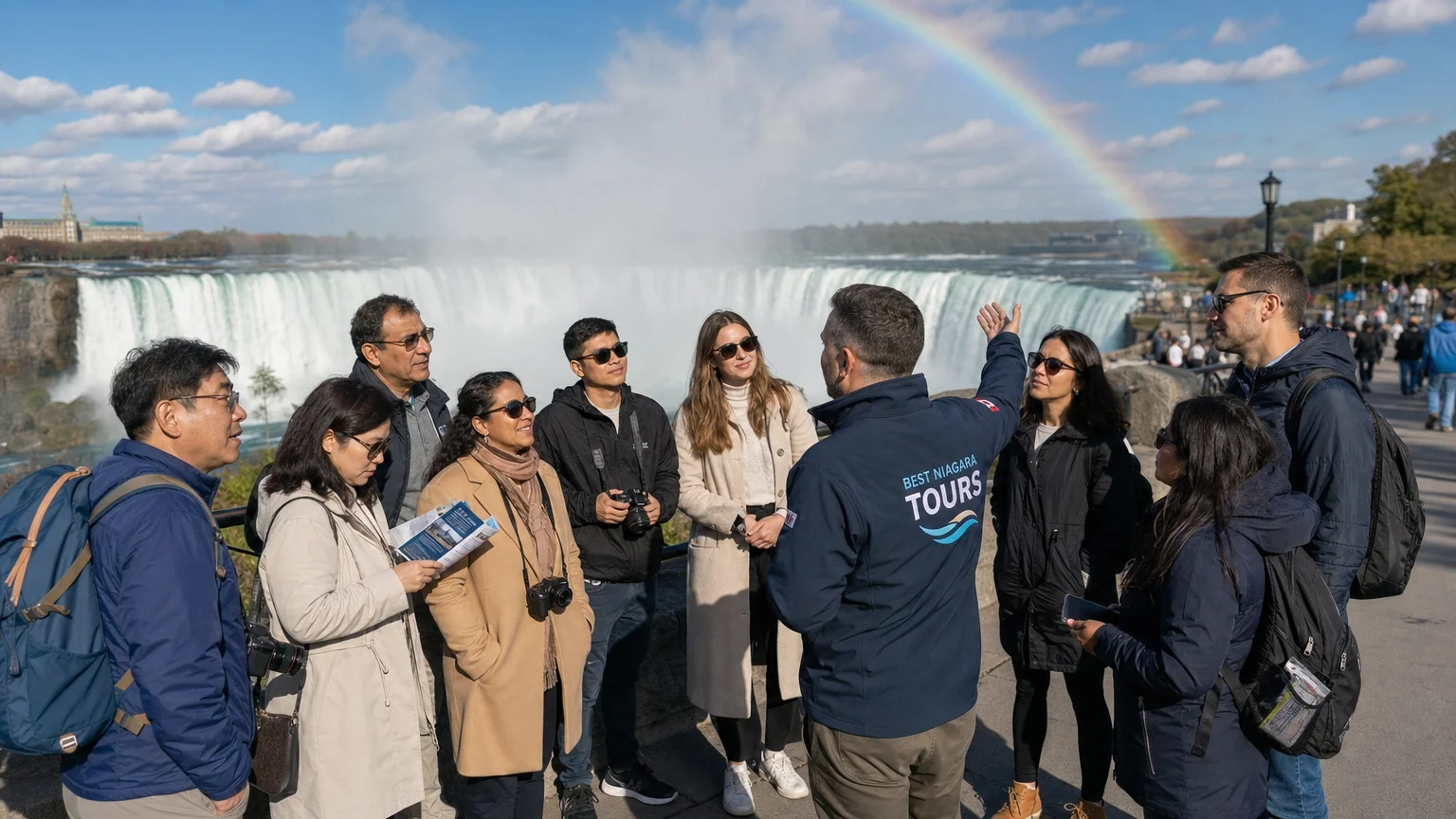
Operators like those featured in our comparison table — BG Tours Canada, Queen Tour, Zoom Tours, and others — structure their packages around the Niagara City Cruise, Journey Behind the Falls, and Skylon Tower precisely because these attractions are accessible, bookable in advance, and consistently deliver the experience travellers expect. Free time built into Canadian-side itineraries also allows guests to explore Clifton Hill, the waterfront promenade, and nearby Niagara-on-the-Lake wineries.
Tours that cross to the US side are available but are less common among Toronto-based operators, and they typically require additional documentation checks, longer scheduling buffers, and higher coordination complexity. For international visitors who may not hold US travel authorisation — a relevant concern for many guests arriving on Canadian eTAs — a Canadian-side-only tour removes any risk of entry complications entirely.
Does the Canadian Side vs. US Side Question Change for International Visitors?
For travellers planning from abroad — whether from Germany, France, Spain, or elsewhere — the Canadian side vs. US side question carries an additional layer of practical importance. Most international visitors fly into Toronto Pearson (YYZ) or another Canadian gateway on a Canadian eTA. That document authorises entry and re-entry into Canada, but it does not confer any right to enter the United States.
Crossing to the US side requires either a valid US visa or, for eligible nationalities, an approved ESTA (Electronic System for Travel Authorisation). Applying for an ESTA solely to spend two hours on the US side of Niagara Falls is rarely worth the administrative effort for a short visit. Our international trip-planning guides for Austria and similar resources address entry requirements in detail for travellers from specific countries.
The practical conclusion: international visitors on a single-country Canada itinerary should plan for the Canadian side without hesitation. The experience is complete, the logistics are straightforward, and no additional travel authorisation is required.
What Is the Best Time to Experience the Canadian Side?
The Canadian side operates year-round, though the experience varies significantly by season. Summer (June–August) brings the largest crowds and the warmest temperatures, making the boat cruise and outdoor promenades most comfortable. Shoulder seasons — May and September — offer shorter queues and pleasant weather with full access to all attractions.
Winter visits deliver the dramatic spectacle of partially frozen falls and illuminated ice formations, though the boat cruise typically suspends operations during the coldest months. Evening illumination of the falls, visible from the Canadian side’s promenade, runs nightly throughout the year and adds a compelling reason to book a tour with a later return time.
For a full breakdown of seasonal considerations, the attraction guides for France and other international planning resources on this site include timing advice relevant to visitors planning well in advance.
Plan Your Canadian Side Tour with Confidence
The Canadian side vs. US side question has a clear answer for the vast majority of visitors: the Canadian side delivers the iconic view, the top attractions, and the most straightforward logistics — particularly for those travelling from Toronto, the GTA, or arriving from abroad on a Canadian eTA.
The next step is choosing the right operator for your group. Use the tour rankings for Vaughan and the master comparison table on this site to compare prices, inclusions, group sizes, and departure points side by side. Whether you are after a budget coach tour or a premium small-group experience with every attraction bundled in, the right Niagara Falls day trip is a short comparison away.
Frequently Asked Questions
Is the Canadian side or US side better for first-time visitors?
The Canadian side is the clear recommendation for first-time visitors. It provides the panoramic view of Horseshoe Falls that defines the Niagara experience, concentrates the top paid attractions within walking distance, and requires no border crossing for travellers arriving from Toronto or elsewhere in Canada.
Do I need a passport to visit the Canadian side of Niagara Falls?
Visitors staying on the Canadian side do not need a passport to cross any border — they remain in Ontario throughout. A passport (or equivalent travel document) is only required if crossing the Rainbow Bridge or another crossing to the US side.
Can I visit both sides in one day tour?
Some specialised tours do cross to the US side, but it is logistically demanding for a single day. Border wait times are unpredictable, and most standard guided tours from Toronto do not include a US crossing in their standard itinerary. Confirm with your operator before booking if a dual-side visit is a priority.
What are the must-see attractions on the Canadian side?
The three marquee paid attractions are the Niagara City Cruise (boat ride to the base of Horseshoe Falls), Journey Behind the Falls (tunnel access behind the waterfall), and the Skylon Tower (aerial observation deck). Clifton Hill and the Queen Victoria Park promenade are free to explore.
Is the Canadian side more expensive than the US side?
Attraction pricing on both sides is broadly comparable, though the Canadian side's three signature experiences are frequently bundled into guided tour packages from Toronto, which can represent better value than purchasing each separately. Always compare the total cost including attractions, not just the base tour price.
Do international visitors need anything special to visit the Canadian side?
Most international visitors flying into Canada need a Canadian eTA (Electronic Travel Authorisation) — check the Government of Canada's official site for your nationality. No US visa or ESTA is required for a Canadian-side-only visit.
Which side has better views for photography?
The Canadian side is the preferred choice for photography. The curved promenade of Queen Victoria Park places photographers directly opposite the full arc of Horseshoe Falls, capturing the complete waterfall in a single frame. The US side offers close-up angles of the American Falls but cannot replicate the panoramic Horseshoe Falls composition.
Contributing writer at Best Niagara Tours.